


September 11, 2025
The Short Take
Energy grades are a quick signal of how a building uses energy. Better performance often tracks with steadier operating costs, more comfortable apartments, and fewer surprises later.
What the letter actually is
New York City requires most buildings over 25,000 square feet to benchmark energy use each year with ENERGY STAR Portfolio Manager. The City converts that 1 to 100 score into a letter and owners must post the official label at public entrances each fall. The label is available for download on October 1 and must be posted within 30 days. Not posting brings a Department of Buildings violation and a 1,250 dollar fine.
Letter thresholds under Local Law 33 as amended by Local Law 95. These thresholds are set by the City and tied to the ENERGY STAR score.
A
B
C
D
F
N
score 85 or higher
score 70 to 84
score 55 to 69
score below 55
no benchmarking filed
exempt or not covered by the federal model
Grades and Local Law 97 are different
The lobby letter shows relative energy performance. Local Law 97 sets greenhouse gas emissions limits for large buildings starting with the 2024 period and tightening in 2030, with penalties for exceeding the caps. A high grade does not guarantee Local Law 97 compliance, but stronger performance helps. Ask for the recent grade history and the building’s LL97 plan in one packet.
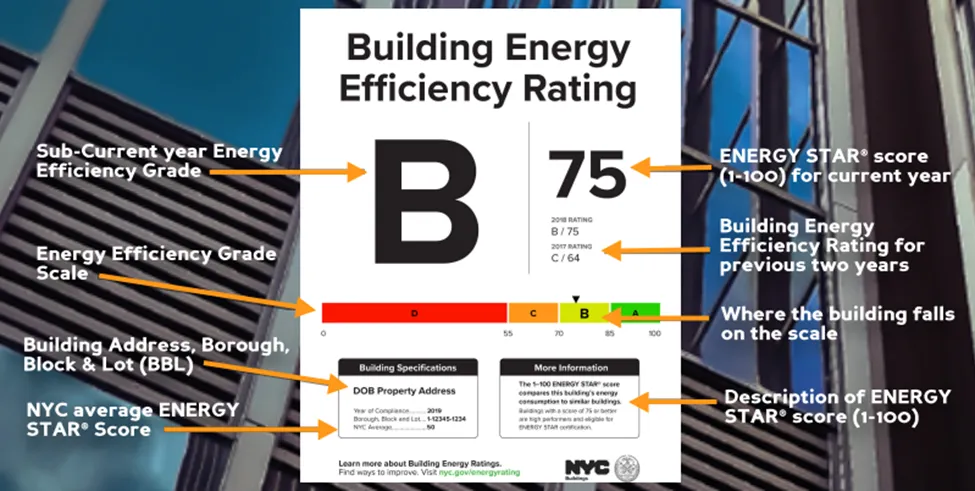
Credit:United Energy Advisors
How this can affect the monthlies
Energy touches cash flow. Here is where it shows up.
Utilities included in common charges
If a building is master-metered for heat, hot water, or electricity, efficiency directly shapes monthly costs.
Upcoming upgrades
Boilers, heat pumps, controls, windows, and insulation projects are often funded through reserves or assessments. Boards may spread part of that into the monthlies until the work is done.
Planning for rules
Buildings mapping a path for Local Law 97 sometimes budget for audits, design, and phased retrofits. That can nudge monthlies now and reduce operating costs once savings land.
How to read an energy grade like a pro
Use the letter to start a conversation, not to end it. Ask for:
- Three years of posted grades and the underlying ENERGY STAR scores. This shows trend, not just a snapshot.
- The latest benchmarking submission and any recent or planned projects tied to energy use.
- The utilities line in the audited financials and any notes on expected changes.
- A simple plan and timeline for system upgrades with the funding method.
- A Local Law 97 summary that lists the current status and next steps.